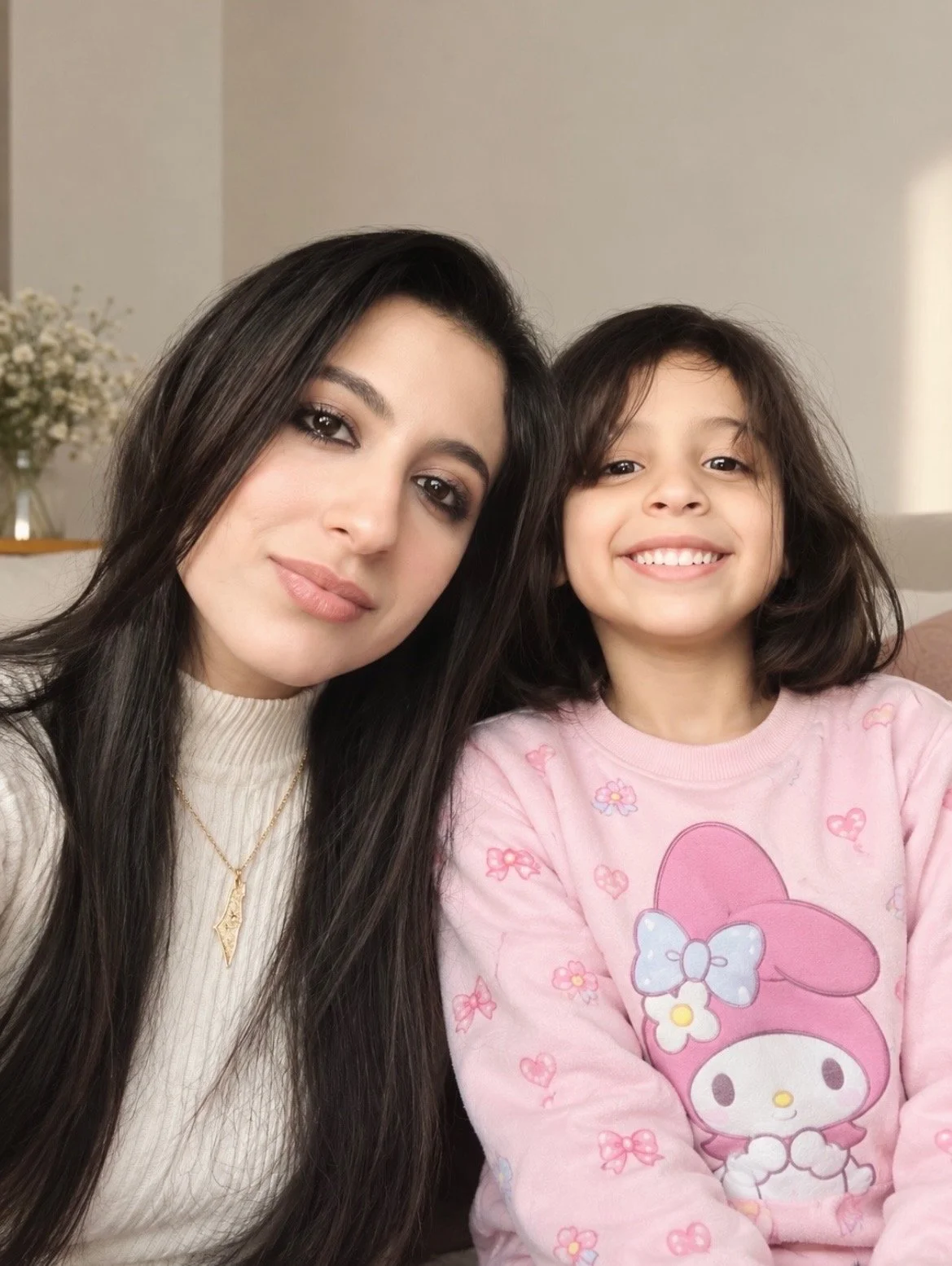
Aseel Eid, 33, “I want the reader to meet the life first. The home before the rubble. The child before the trauma. The ordinary Tuesday before history tears through it.”
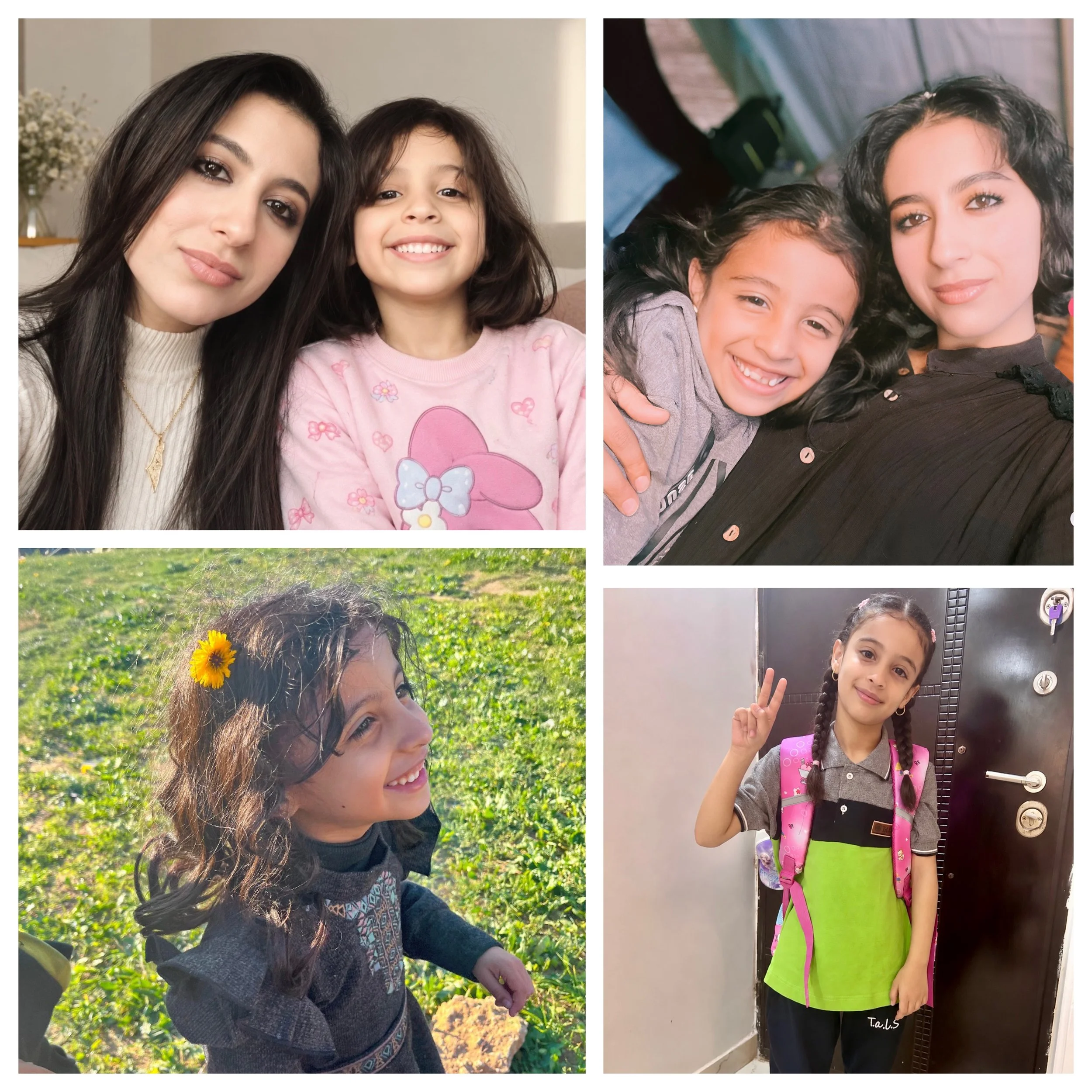
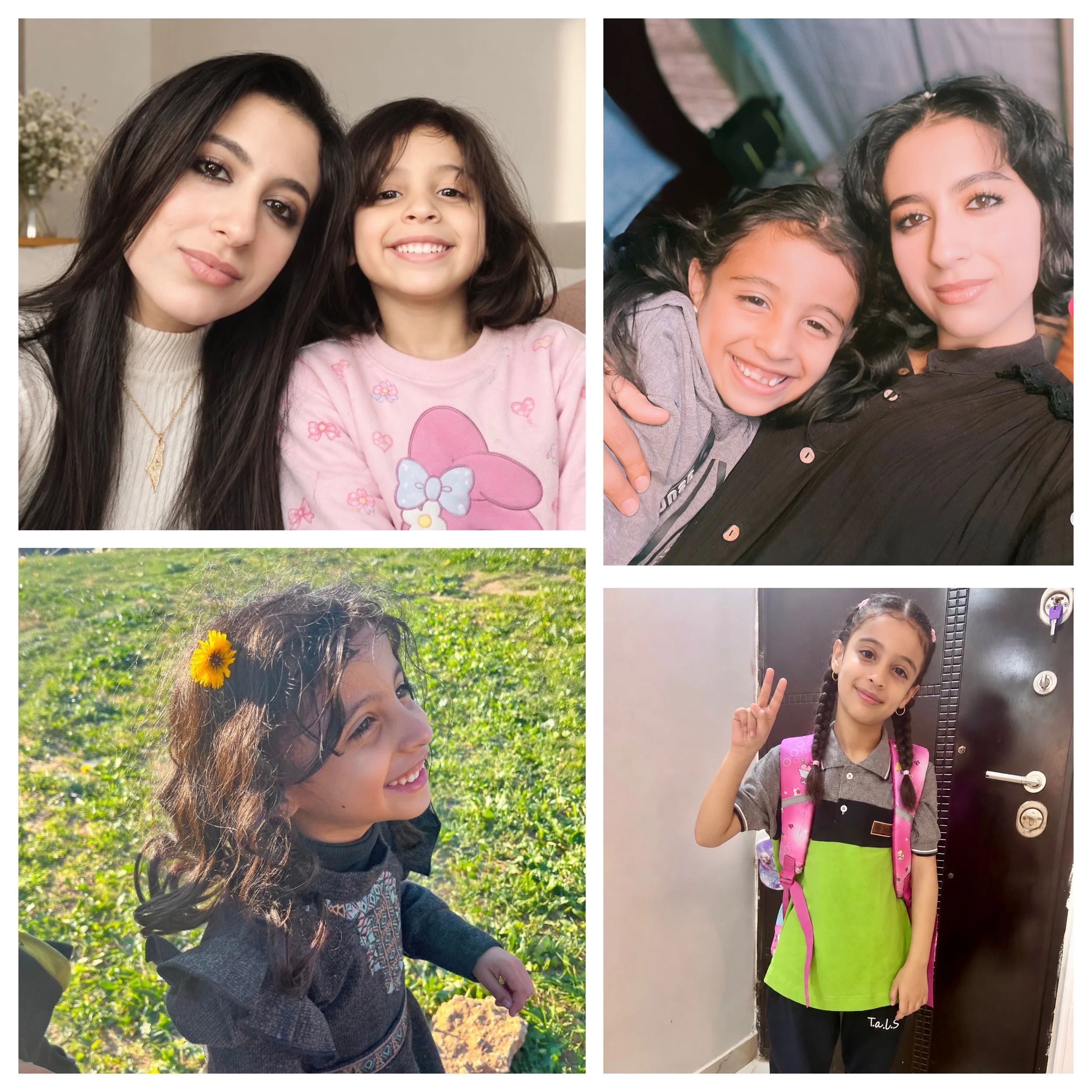
Aseel Eid, 33, is the first Palestinian person I have connected with who has successfully left Gaza for Egypt in order to provide safety for her daughter, Nabila, and herself.
Her success in this pursuit came with an incredibly difficult and expensive move that has brought an abundance of challenges with it.
These range from providing stability and healing for Nabila, as well as the practical matters of creating a life in a new country, all atop the firsthand trauma that came with seeing Gaza attacked for eight months, and the survivor’s guilt that has followed her from Palestine.
In our correspondence, Aseel has been remarkably generous and forthright in sharing about these matters, all of which she is exploring and working to preserve in a manuscript she is working on currently.
In her words, Aseel said that the start of writing her story came from a place of detailing “my experience with Nabila during the war, our displacement, our attempt to survive Gaza, and what survival looked like afterward.
“It is not only about leaving Gaza, but about what remains inside the body and the mind after leaving: survivor’s guilt, motherhood under terror, a child trying to recover her childhood, and the strange life that begins after everything familiar has been destroyed.”
Progress on this project is developing well, Aseel told me, and the following passage from an email that arrived September 30th, 2026 does well to define her goals for her writing.
“I don’t want Palestinian lives to enter the page only at the moment they are wounded, displaced, or destroyed,” she wrote.
“I want the reader to meet the life first. The home before the rubble. The child before the trauma. The ordinary Tuesday before history tears through it.”
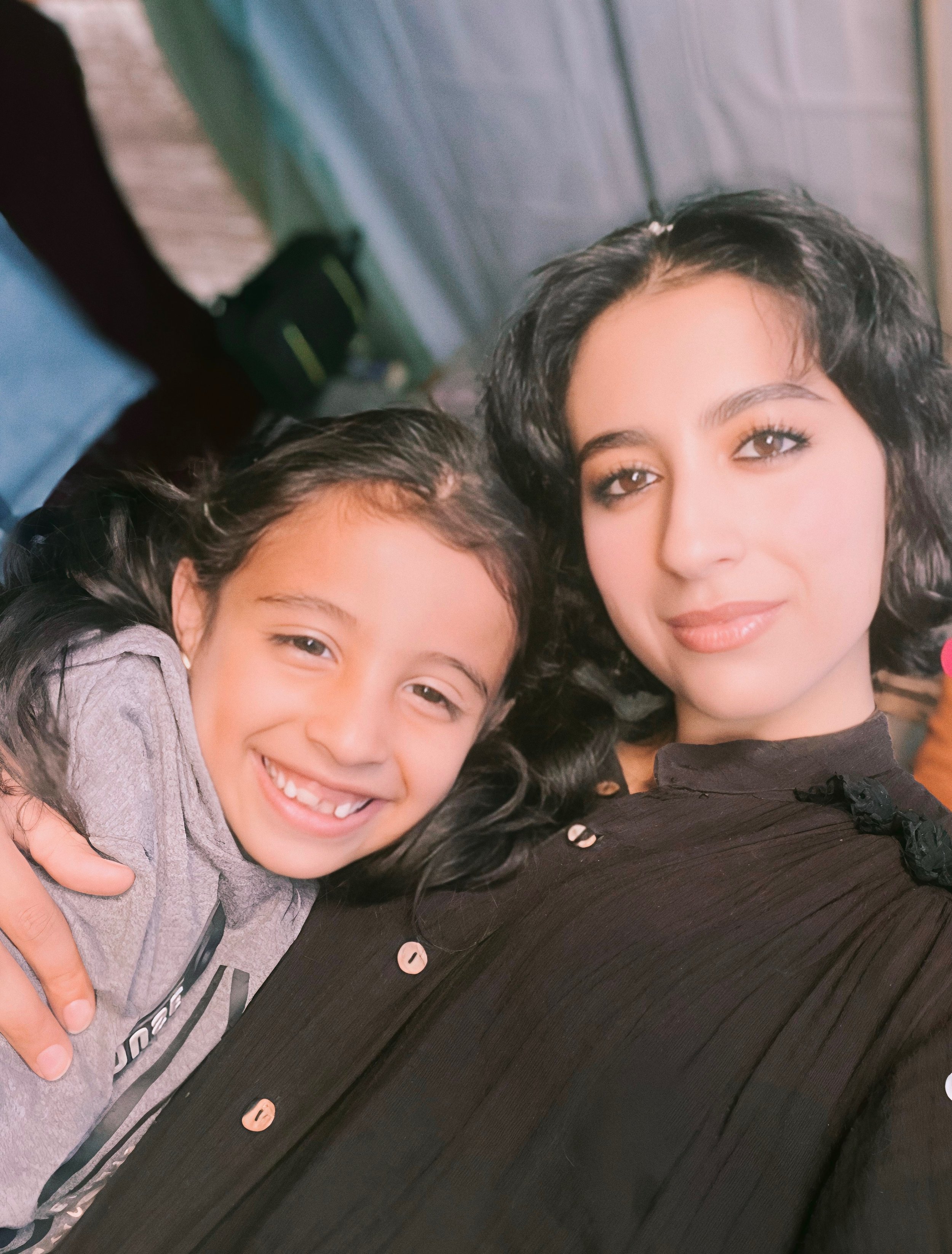
As our conversation has continued, Aseel has shared a deeply personal journey with no shortage of experience and reflections to draw on.
“Sometimes it feels like a book is already there,” she said, “scattered in fragments, memories, scenes, and wounds. I only need to gather it carefully.”
Aseel’s story crosses many layers and times, reflecting the immediate challenges that have found her and her daughter in their journey, while at once threading current events that have emerged from Palestine’s history as a colonized region (Amnesty International and Al-Jazeera do excellent work summarizing past events leading up to the current day at the links provided), bearing firsthand witness of a people and place where genocide has and continues to grow unabated, in spite of rising resistance to this internationally-funded brutality.
Leaving Gaza for Egypt
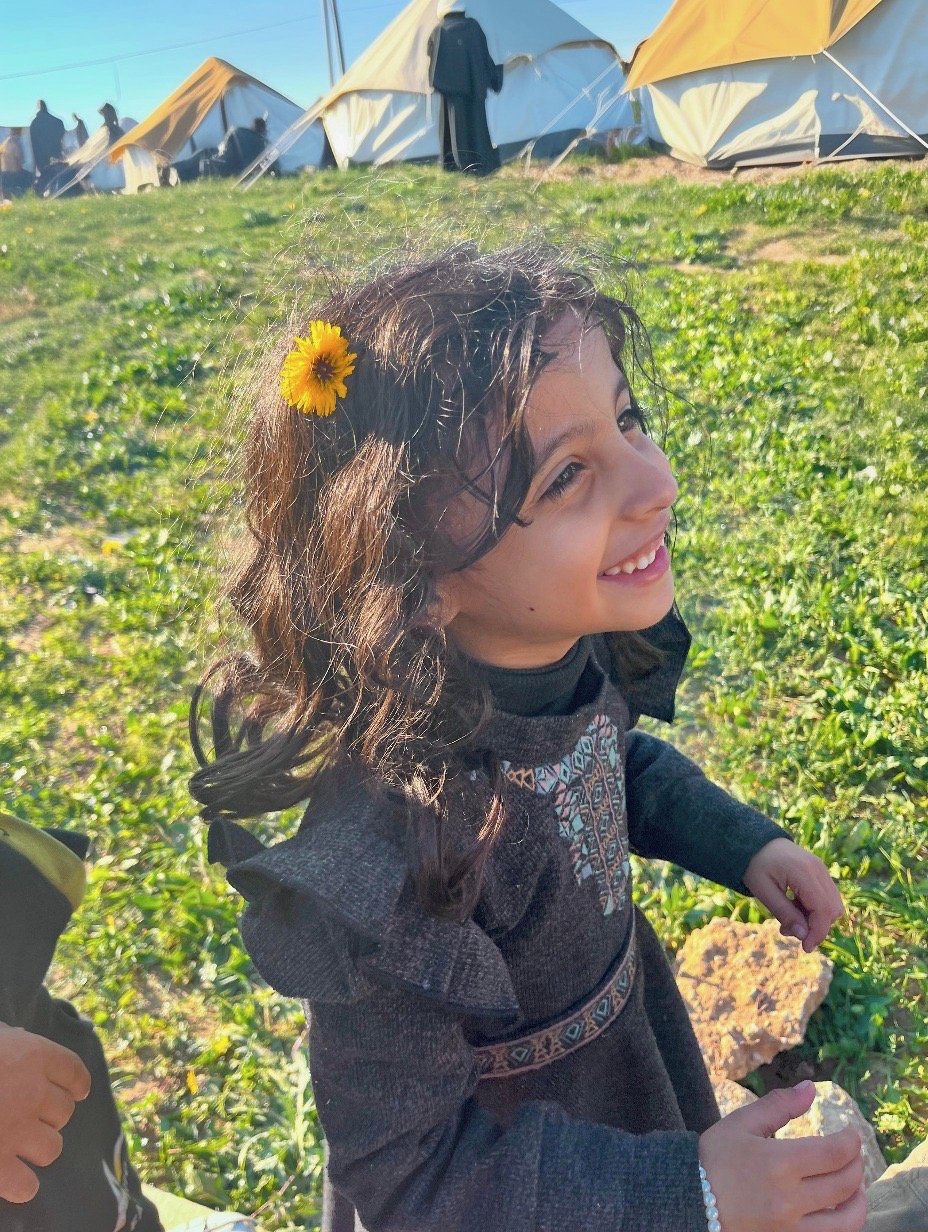
In leaving Gaza, the $15,000 Aseel paid for her and Nabila to enter Egypt stood tall as, “an impossible amount,” she said, paired with the unfortunate “political sensitivity around the permanent displacement of Palestinians.”
Even so, Aseel said that after eight months of enduring the bombardment of Gaza, her concerns as a parent won out.
“The fear of losing Nabila was the heaviest part of it,” she said. “While we were living in the tent, the war was at its most brutal, and I could not sleep without imagining the worst.
“I kept having nightmares that I might find her wounded, burned, or torn apart like so many children we had seen and heard about.
“At some point, survival became not a choice but an unbearable urgency.”
According to Aseel, remaining where they were saw them losing “almost everything that had formed the structure of our lives: our homes, my work as an architect, and my ex-husband’s social media company.
“The war did not only destroy buildings. It dismantled the ordinary idea of a future.”
The future that found Aseel and Nabila in Egypt bore safety, but brought incredible challenges as well.
“After leaving Gaza, we stayed in Egypt for about seven months,” she said. “We could not obtain residency or proper legal papers, because Egypt does not officially treat us as war refugees.
“Later, Oman opened a possible path for some Palestinians, so we traveled there. Oman is a calm and beautiful country, and we were given residency for two years, but life there was very difficult for us socially, culturally, and practically.
“After around a year and a half, we were told that Palestinian residencies would not be renewed. I still do not fully understand why.
“Sometimes it feels as if being Palestinian means carrying a closed door from one country to another.”
Aseel and Nabila have since come back to Egypt, where she said she is in the difficult position of, “now trying to start again from zero. In the last few months, I began working in freelance design and digital products, trying to create an income while caring for Nabila.
“We are currently living in Egypt without formal residency or stable legal papers, although the authorities are generally allowing Palestinians in our situation to remain.
“I have enrolled Nabila in a private school, but because of the paperwork issue, she will attend classes without receiving officially accredited certification for now.”
For Aseel, the unpredictable state of these practical matters of legal status, residency, documentation, schooling, and work add to the grief she feels for what has and continues to happen in Palestine.
“We live in a strange space between survival and uncertainty,” Aseel said. “We are physically outside Gaza, but emotionally we are still tied to everyone we love inside.
“We are constantly trying to reach our family, and sometimes we lose contact because of the internet collapse there. That silence is terrifying."
Survivor’s guilt
Aseel was candid about the survivor’s guilt that has come along with her current situation, saying that it “is one of the hardest parts to speak about because it is not rational, but it is very real. It lives in the body before it becomes an idea.
“My body is outside Gaza now, but a part of me is still there, with the people I left behind, with family, friends, neighbors, and with all the lives that didn’t get the chance to leave.”
When asked about what Palestinians who are still in their homeland say about those who have left, Aseel emphasized grace and compassion.
“In my correspondence with people still in Palestine, I often find that they do not speak about survivor’s guilt in a direct or accusatory way. Many of them are generous in a way that almost hurts. They say things like, ‘Thank God you and Nabila are safe,’ or, ‘At least one of us got out.’
“But sometimes that kindness makes the guilt heavier, not lighter. Because you know they are still living what you escaped, and yet they’re the ones trying to comfort you.”
For Aseel, having access to resources and benefits denied to people in Palestine brings a distinct “relief of being alive, but also the shame of safety.
“There is the strange violence of ordinary life after catastrophe: buying food while people you love are hungry, sleeping in a bed while others are in tents, taking your child to school while children in Gaza are being buried or amputated.
“You live in two worlds at once. One asks you to function, and the other keeps reminding you that functioning itself feels like betrayal.
“I have not dealt with survivor’s guilt in any complete way. I don’t think that is honest to say. I live with it.
“Some days I try to transform it into writing, into caring for Nabila, into keeping memory alive, into refusing silence. But it does not disappear. It changes shape.”
On Writing
By recording these impressions and her overall journey, Aseel shared that the act of writing has brought perspective and a sense of permanence on what could very well be lost if she does not tell her story.
“I think the instinct to record the journey from Gaza to Egypt came from fear,” Aseel told me. “Not only fear of death, but fear of erasure.
“So much was happening so quickly: displacement, hunger, terror, the collapse of ordinary life, the constant movement from one unsafe place to another. I felt that if I did not record it, the experience would either become a wound too chaotic to enter, or it would be swallowed by the outside world as another Gaza story.”
Writing in this way came about with no formal training or previous desire to share her words publicly, Aseel said, “I am originally an architectural engineer, and before the war I had my own design and engineering company in Gaza. My daily work was built around space, structure, homes, materials, and the intimate ways people inhabit a place.
“Maybe that is why memory, rooms, houses, and the loss of home appear so strongly in my writing now.
“Writing was always there, but quietly. It never went much beyond social media or the small circle of people close to me. It was not something I had turned into a literary project before. It was more like a private way of thinking aloud, of arranging emotion, of trying to understand myself and the world.
“I didn’t think of myself as building a manuscript. I was simply writing because something inside me needed language.
“After Gaza, that changed. Writing became less optional. It became a way to hold on to what was being destroyed, and also a way to resist the flattening of our lives into numbers, headlines, and political language.
“Before the war, writing helped me express myself. after the war, writing became a form of witness.”
For Aseel, the details that come forward in her writing both humanize and mark the uniqueness of her experience.
“I did not want our life to become only a statistic,” she said. “I wanted to remember that before the war we had a home, routines, work, school, small objects, ordinary mornings. I wanted to remember what it meant to be a mother trying to protect a child when protection itself had become almost impossible.
“I wanted to remember the psychological details, not only the visible destruction. The way a child listens to the sky. The way a mother sleeps with her daughter’s body pressed against her, afraid to wake up and find that the child has become fragments. The way survival begins to feel like something you have to justify.”
Aseel was also clear about the limits of writing, and up front about the struggles she encounters on and off the page.
“What writing accomplishes for me is not healing in the simple sense,” Aseel told me. “Writing does not return the dead. It does not rebuild the house. It does not erase what Nabila saw or what I feared.
“But it does give form to what would otherwise remain unbearable and shapeless. It turns panic into sentences. It turns fragments into a record. It allows me to say: this happened, and it happened to human beings, not to symbols or numbers.
“Writing also protects something. It protects memory from being simplified. It protects Gaza from being reduced only to death. It protects Nabila, in a way, because I am trying to give language to what happened without forcing her to carry it alone.
“I want the writing to say that she is a survivor, yes, but she is still a child before anything else. I do not want her to become an emblem that strangers consume and forget. I want the writing to honor her childhood, not replace it.”
Aseel also shared that being fair and accurate in what she writes is weighed against serious concerns that she could fall short of the task in a number of different ways.
“The most difficult part of writing is the fear of betrayal,” she told me. “I worry about betraying those who are still in Gaza by writing from outside. I worry about betraying the dead by making language too beautiful around their suffering.
“I worry about betraying Nabila by writing about her pain before she is old enough to fully own her story. I worry about betraying the truth if I soften it too much, and I worry about betraying the reader if I make it only unbearable.
“There is also the difficulty of writing from trauma while still inside its aftermath. Some memories are not memories yet. They are still active inside the nervous system. They return as images, physical sensations, nightmares, sudden fear.
“Sometimes I do not know if I am writing about the past or writing from a place that is still happening inside me.”
Even so, Aseel pursues her act of witness with courage, deep respect, and great care. The way she describes doing so serves as excellent guidance for writing along any pursuit of truth.
“How I meet this difficulty is slowly,” Aseel said. "I try not to force the material into neat conclusions. I try to let fragments remain fragments when they need to. I try to write with dignity, not performance.
“I also try to keep asking myself what the writing is serving.
“Is it serving truth? Is it protecting memory? Is it allowing the reader to come closer without turning suffering into spectacle? Is it leaving space for Nabila to remain a living child, not only a symbol of what Gaza survived?
“For me, this manuscript is not only about surviving Gaza. It is about what survival does afterward. To motherhood. To language. To the body. To memory. To the idea of home. To the child who has to learn words no child should know, and to the mother who has to help her unlearn fear without pretending it never existed.
“That is what I hope the work can become: not only testimony, but an archive of feeling. A record of what happened, yes, but also of what remains in those who lived.”
With these goals in mind, Aseel updates me on progress with her writing, a line from a message on September 21, 2026 encapsulating both practical progress on the piece, as well as the essence of the story she wants to share.
“I’m actively working on the manuscript,” she wrote to me, “I want it to be written in the language of life as much as the language of survival.
“Gaza was never simply a place where terrible things happened. It was our ordinary world, full of homes, work, friendships, ambitions, and all the small, unremarkable details that make a life feel like your own. I want those lives to exist on the page beyond the moment of their destruction.”
Aseel shared that the focus required to tell this story is rightfully challenging.
“The process of writing has been difficult, but necessary. Sometimes I feel that I am not writing from memory, but from a wound that is still alive. I am trying to collect fragments: scenes from Gaza, moments with Nabila, the fear of losing her, the guilt of leaving, the silence after survival, and the long attempt to help a child believe that life can become gentle again.
"What I hope to accomplish by sharing this story is not only personal testimony. I want people to understand what survival actually means for Palestinians, especially for children.
“Survival is not the end of the story. Sometimes it is the beginning of another kind of suffering, one that is quieter, harder to explain, and often invisible.”
Nabila
Beyond these interior challenges and survival, Aseel spoke to the healing process she is currently working through with Nabila.
“Nabila is trying to heal from what she saw and lived through,” Aseel said. “She lost friends, relatives, school, home, and the basic innocence every child should have been allowed to keep.
“I am trying to help her rebuild a sense of safety, while I carry my own survivor’s guilt and the constant fear for those we left behind.”
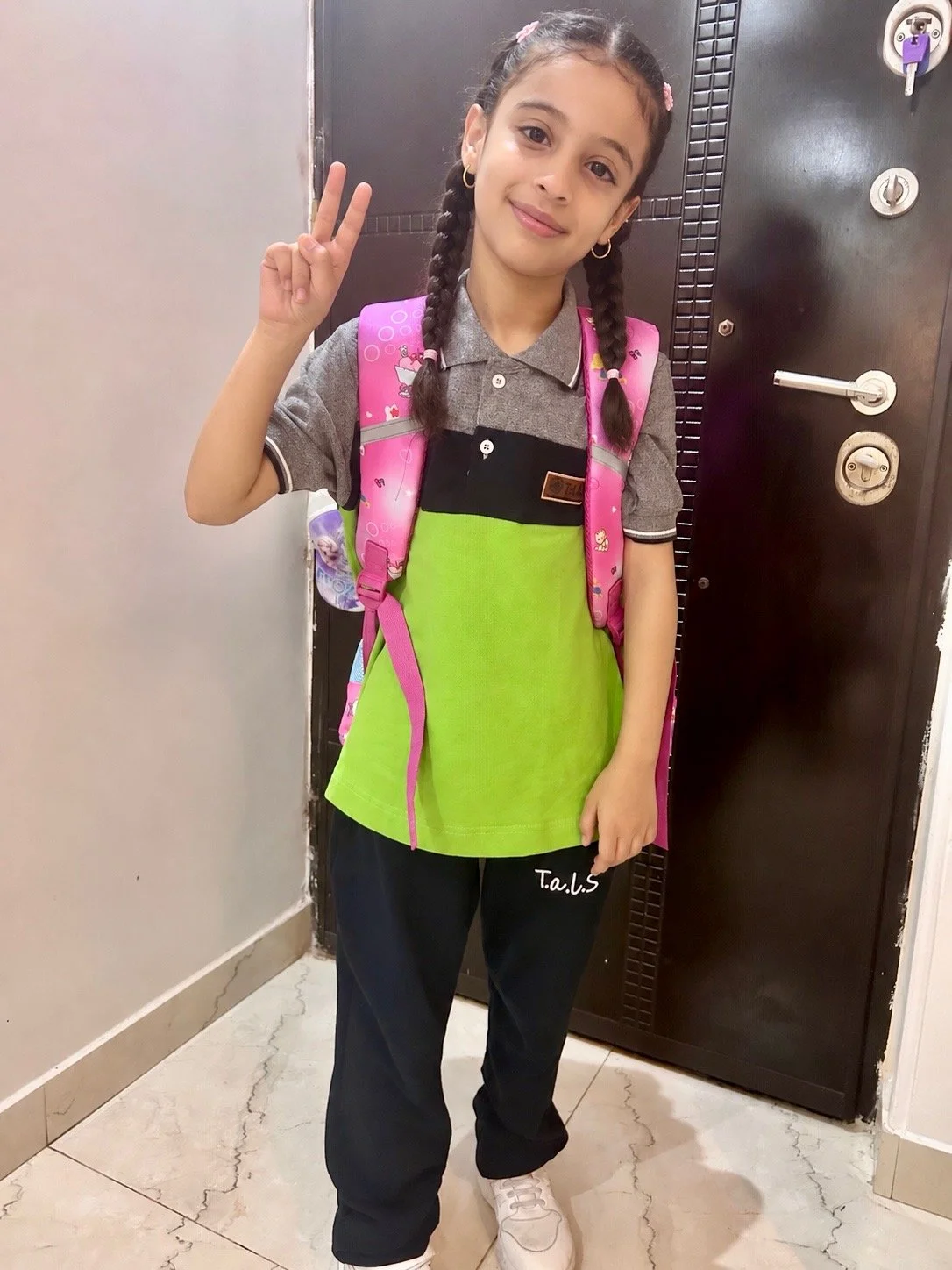
It is heartening to hear of progress on this front in our latest correspondence, as Aseel shared that Nabila has officially started school in Alexandria, which has brought good things to both their lives.
“Watching her discover school again has been a beautiful, complicated experience,” she said. “She’s excited about her books, her classmates, and everything she’s learning.
“I’m trying to make room for that excitement while navigating the less visible difficulties of beginning again.
“We’re finding our rhythm here in Alexandria, little by little.”