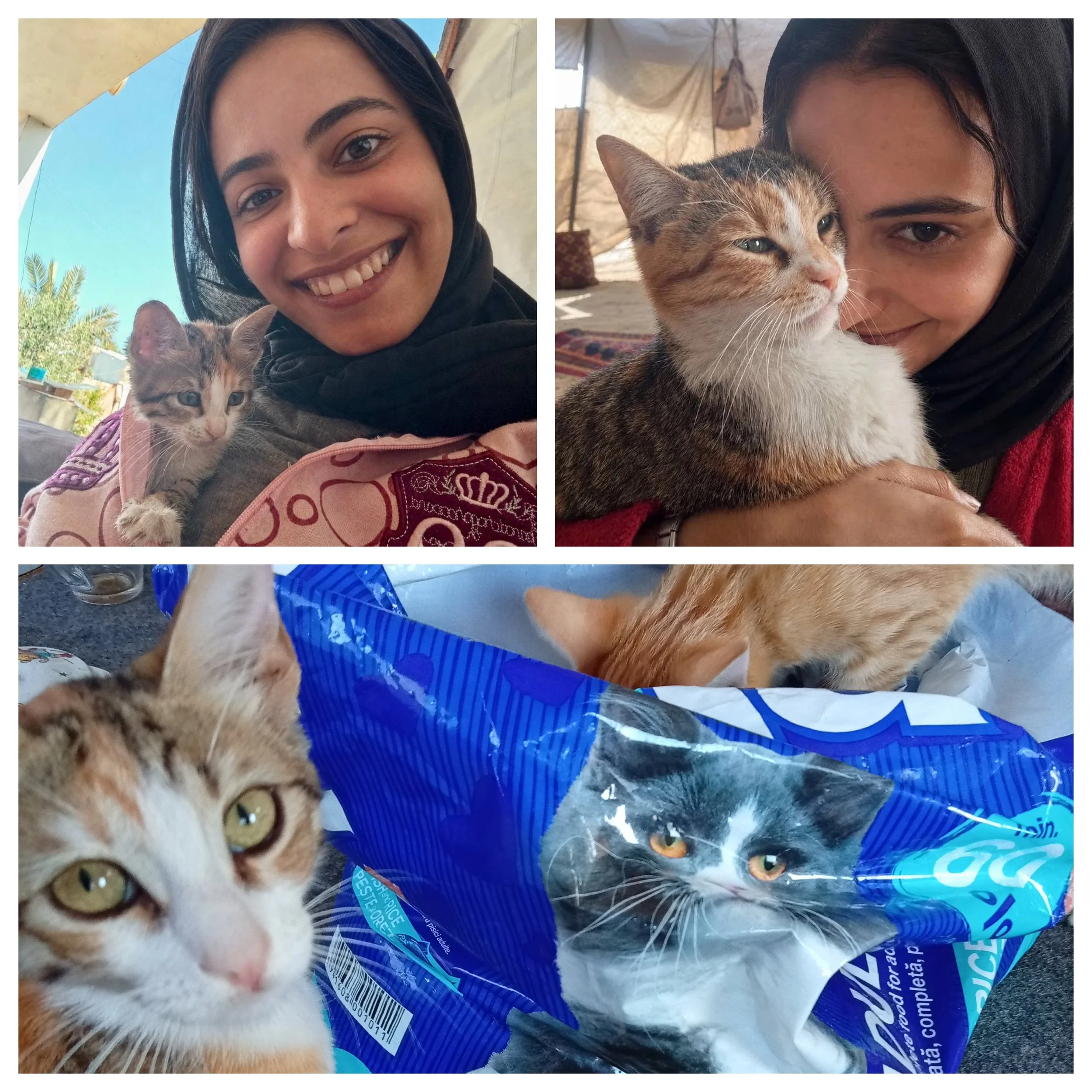
Marwa Mohammed Hafez, 29, “In Gaza, mercy is not a luxury. It is a responsibility.”
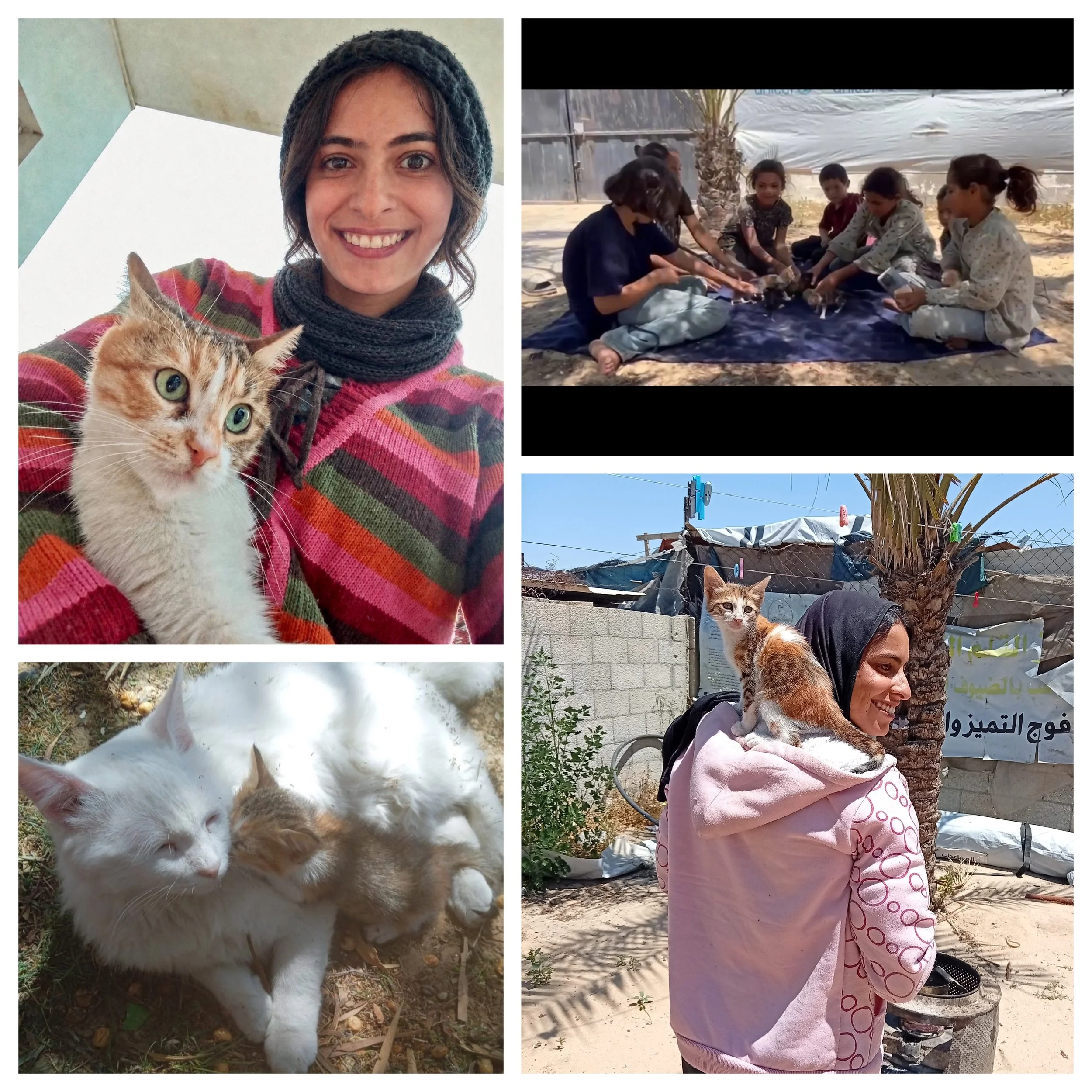
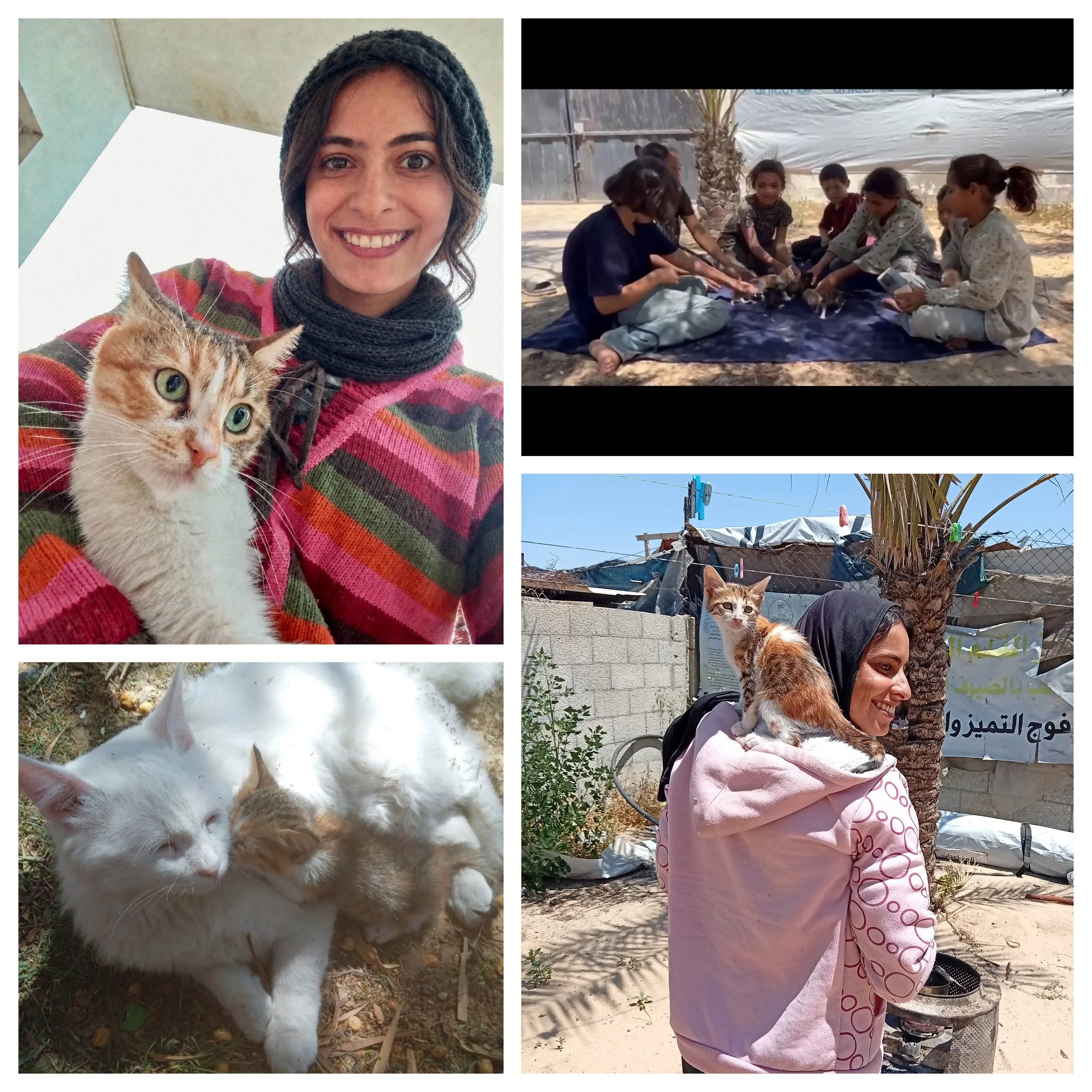
Marwa Mohammed Hafez, 29, was born and raised in Gaza City, the capital of Gaza, Palestine, where she is currently living in the midst of the ongoing genocide against the Palestinian people.
Violence and conditions close to or completely unlivable come with much of the imagery and videos shared by Palestinians in the region at this time.
Marwa’s channels do much of the same, but her focus stands out as particularly unique with animals, specifically cats and dogs, being spotlighted in her work.
Marwa shares much about how she gives practical and much-needed aid to cats and dogs around her and, very movingly, writes on how the energy she is giving these animals is cyclical, as the care and companionship shown back to her by these animals acts as a valuable source of support at a time of tremendous loss and trauma.
Every animal in Palestine is fully capable of feeling the pain, fear, and joy, and represent fellow living beings that are suffering alongside the humans they live with in the region.
And, as eye-catching as pets can be, the relatability of seeing Marwa with her animals connects viewers with their own experiences of having pets, loving them, and feeling deeply for them when they are suffering for any reason.
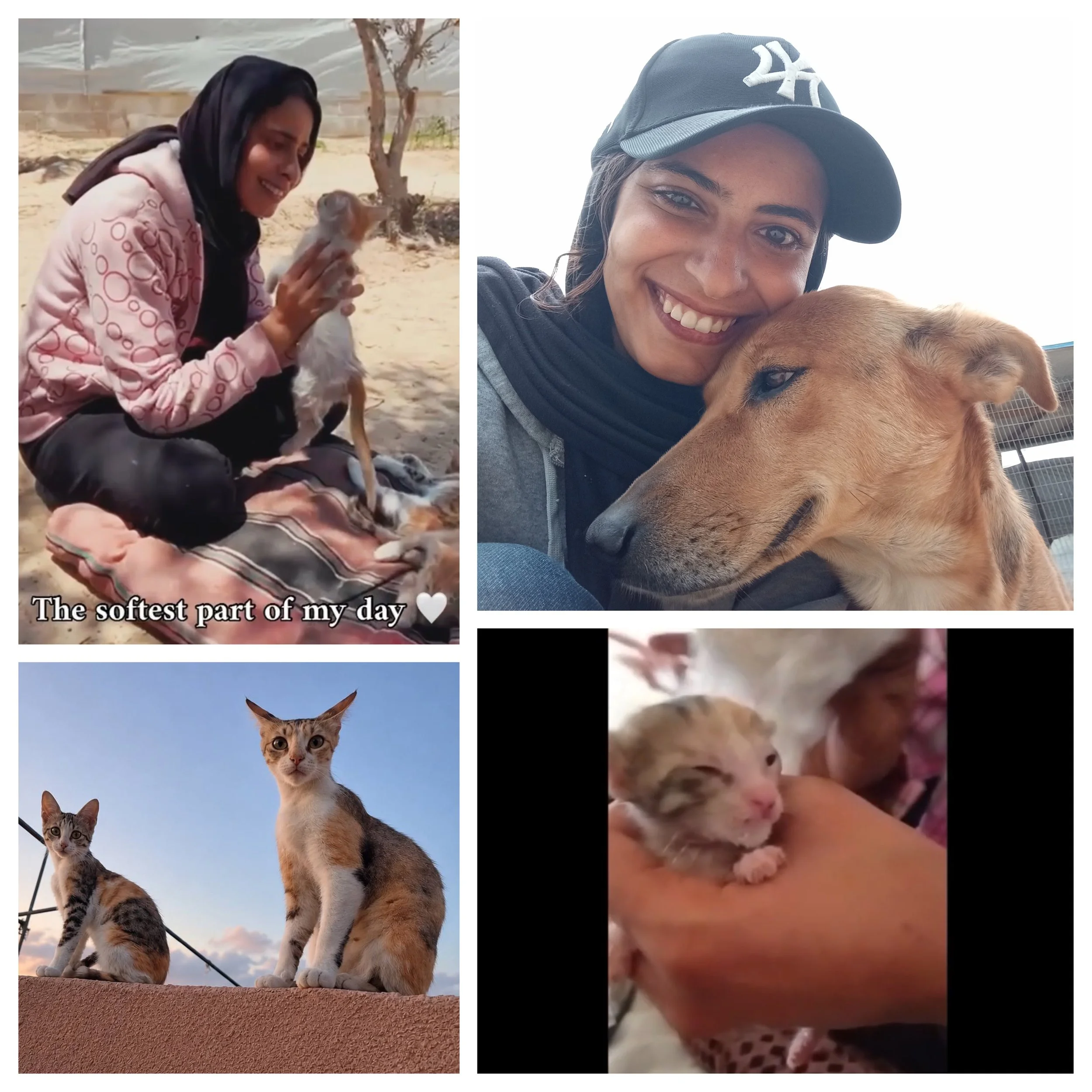
In her own words on her Chuffed fundraiser page https://chuffed.org/project/182708-helpmarwacareforgazasforgottencats, Marwa speaks to her ongoing efforts to help the animals around her.
“Today, even while displaced and living through hunger, fear, and uncertainty, I am still caring for the animals around me. Some are cats I rescued. Some are stray animals who have nowhere else to go. All of them are innocent lives trying to survive a reality that has become unbearable for both humans and animals.
“After more than two and a half years of war, displacement, hunger…. I can no longer carry the daily cost of caring for the cats alone.
“I resisted asking for help for a long time. But the animals need food every day. They need medicine. They need treatment. They need transport to reach whatever veterinary help still exists.
“In Gaza, mercy is not a luxury. It is a responsibility.”
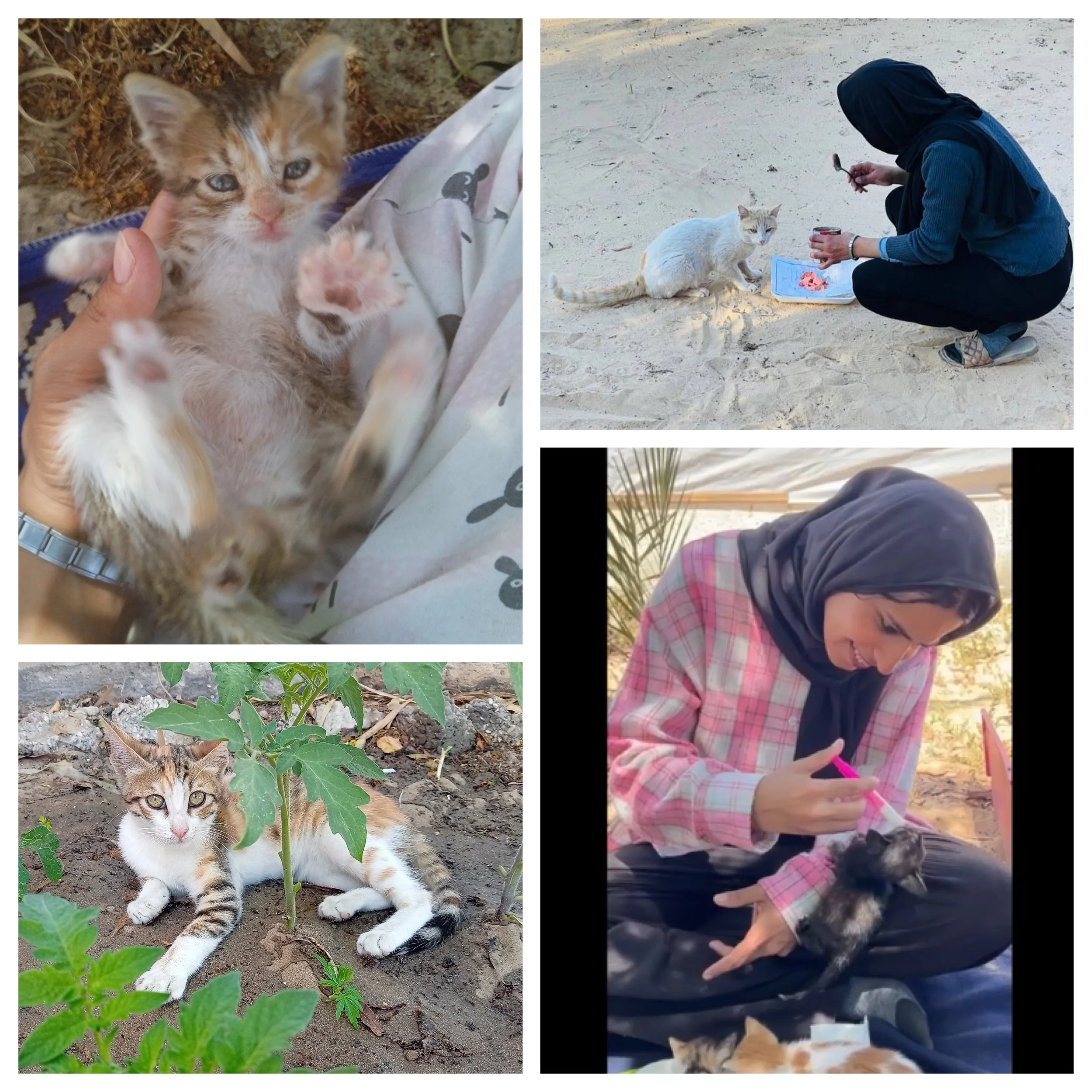
Marwa was kind and generous enough to answer some questions I sent her, and I highly recommend following her Substack https://marwamohammad.substack.com/ to see the incredible videos, photos, and stories she shares at a consistency that is impressive in any context, and testifies to a truly exceptional talent meeting heartbreaking demands with levels of resilience, strength, and passion that are as exceptional as they are inspiring.
What inspired you to focus on cats with your writing and the imagery you share?
I have loved animals since I was a child, especially cats and dogs. I have always felt a deep emotional connection with them. They have been a part of my life and my way of seeing the world for as long as I can remember.
This natural love is what inspired me to focus on cats in my writing and the images I share. In the middle of war and hardship, I feel they are among the most vulnerable and silent beings, and I want to reflect their reality and give them attention and care through my work.
Please share how you started on Substack and what you are trying to accomplish with your work.
I started on Substack about two months ago (April 2026). My main goal was to bring attention to the forgotten animals of war. Most of the news coverage focuses on people, which is completely understandable, but animals often have no voice and are left unseen. I wanted to be a voice for them.
My aim is to support animals in these very difficult conditions by highlighting their situation and helping raise awareness about their need for food, basic care, and safety. I want to show their suffering, but also their resilience, and encourage people to care even in the middle of such hardship.
What are you seeing in terms of news coverage, and what do you think journalists are missing?
In my view, most news coverage naturally focuses on human suffering, which is extremely important and understandable. However, what is often missing is the reality of everything else affected by war, especially animals. Their suffering is rarely mentioned or documented.
In Gaza, the situation is so severe that human life is the priority in media coverage, and this is expected in such crises. But at the same time, this leaves almost no space to talk about animals who are also starving, displaced, and struggling to survive without any protection or voice.
I feel that journalists are not necessarily ignoring this intentionally, but the scale of human tragedy often overshadows everything else.
Still, these animals are part of the same environment, and their suffering is real and continuous, even if it remains unseen.
What do you want the world to know about Gaza and Palestinians?
I want the world to understand that what is happening in Gaza is not just statistics or headlines, but real human lives being destroyed, families being erased, and an entire society struggling to survive under extreme conditions.
For Americans in particular, I wish there was a deeper understanding of the human reality behind the news.
This is not a distant political issue; it is about people who deserve the same basic rights, safety, and dignity as anyone else in the world.
I believe greater awareness and access to firsthand voices could help bridge a lot of misunderstanding and distance.
What I hope most is that people see Palestinians as human beings first, beyond any political framing, and recognize the ongoing suffering that continues every day.
Where do you find hope, and who inspires you?
I find hope in small things, even in the hardest days.
I find it in the resilience of people around me in Gaza, in their ability to continue despite everything, and in the quiet moments of kindness that still exist in the middle of hardship.
I also find hope in animals themselves, especially cats and dogs, who continue to survive and trust despite everything they go through. Their presence reminds me that life still continues, even in the most difficult conditions.
Inspiration for me comes from ordinary people who show strength and compassion without needing recognition. And also from anyone who chooses to care, speak up, and show humanity in times when it is easier to stay silent.
Marwa recently experienced additional hardship with contamination of local water resources, and shared the following about this situation that comes about with frequency.
Regarding the water contamination, unfortunately it has become a common problem in many areas of Gaza, especially in displacement camps.
In our case, the water was often desalinated but not properly disinfected afterward, which can allow contamination to spread. Many families depend on whatever water is available, even when its quality is uncertain, because there are very few alternatives.
For us, the biggest daily concerns are very simple: finding clean water, securing food, and staying safe. These basic necessities have become a constant struggle.
When contaminated water spreads through a camp, it affects many people at once because everyone relies on the same limited sources.
In closing, Marwa had the following to share, which I see applying to anyone who supports elevating Palestinian voices.
Thank you for wanting to tell this story with honesty and compassion. I am honored that you are using my words and the stories of my little cat companions as part of your work.
If sharing our experiences can help people better understand what life is like here and encourage support for those in need, then that means a great deal to me.