"Why I See You In Everything?" Mahmoud Basem Al-Kafarna
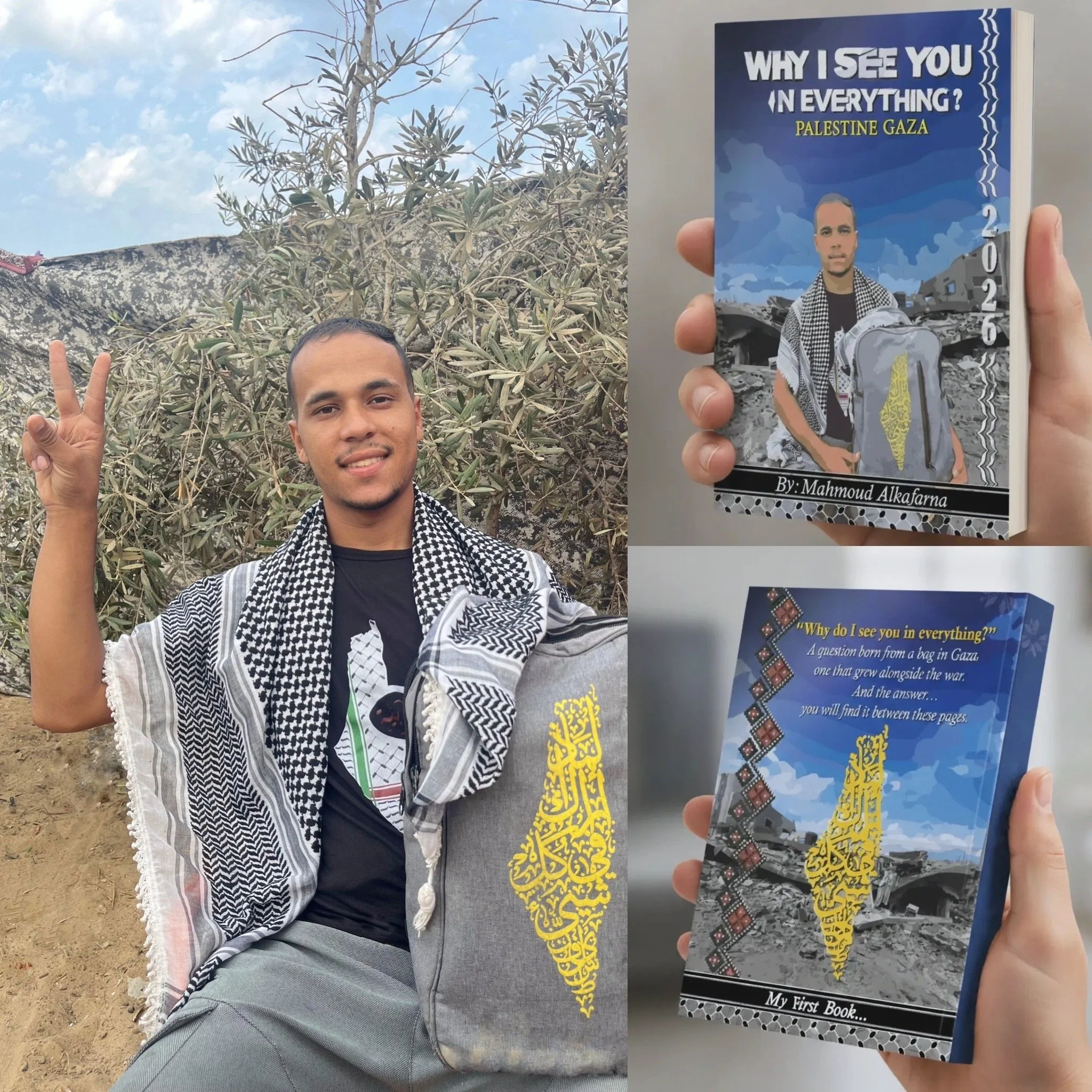
Mahmoud Basem Al-Kafarna was kind enough to compliment my interview with poet Maya Salameh a short time ago, and I was happy to start a conversation from that point to learn more about him, his background, and his book, Why I See You In Everything?
Elevating the voices of Palestinians in any capacity is an honor for me, and this is especially the case with Mahmoud, as he is currently living in what he has described as “survival mode” within the genocide that has been and continues to be perpetrated against the Palestinian people.
Any support for Mahmoud and his family is appreciated tremendously, and I am grateful for the privilege of sharing more of his story in the conversation that follows.
What is your full name, your age, and where are you from? Where are you living now?
My full name is Mahmoud Basem Al-Kafarna. I am 21 years old. I am from Beit Hanoun, in the northern Gaza Strip, Palestine.
I am currently living in the Gaza Strip, moving between displacement areas and tents after my home was destroyed.
When did you start writing?
I started writing after more than a year of war.
What inspired you to write your story?
What inspired me most was my grandmother, who used to recite poetry she had memorized long ago. Her words gave me strength and inspired me to write.
I was also inspired when I saw how many people around the world care about the Palestinian cause.
How was your book published? Who helped you, and what kind of support did you receive?
I published it myself. I did not receive any financial support. What helped me more than anything was my belief in my message, and the encouragement of people who read my words and believe in them.
Their support gave me the strength to continue writing despite hunger, fear, and loss.
What are your main goals in sharing your story?
My main goals are to convey the truth as we live it, and to show the world that we are not just numbers in the news, but human beings with dreams, memories, and lives that were once full of hope before they were destroyed.
I also want Gaza’s voice to reach the world and to show the human experience of living under war.
What were the biggest challenges you have faced in sharing your story?
The biggest challenges were the harsh conditions I lived through during the war. I had no safe place to write. I wrote inside a tent, under bombing, surrounded by fear, hunger, and cold. Often, writing meant reliving painful moments losing my home, my memories, my friends, and everything I loved.
Are you still writing now? If so, what is your current project?
My current project is documenting this entire period and preserving it in an archive not only as personal memories, but as a real testimony of what we lived through.
I am collecting my texts, stories, and photos, and working on turning them into another book.
What do you want the world to understand about where you live and the situation of the Palestinian people right now?
I want the world to understand that the place where I live is no longer a city, it has become a place of rubble and broken memories. We are not living normal lives, we are living in survival mode, trying to secure the most basic human rights: safety, water, food, and a place to shelter from fear.
What gives you hope?
What gives me hope first and foremost is my family. When I look at them, despite everything we've lost and everything we're going through, I see that they're still trying to smile and carry on. That alone makes me feel that I have to stay strong for them.